
Open by Andre Agassi: Book Summary & Notes
Agassi shares his brutally honest reflections on identity, pressure, and finding meaning beyond success.

Andre Agassi is one of tennis’s most iconic champions. He is an Olympic gold medalist, a Grand Slam winner, and a global figure who turned public success into a private search for meaning.
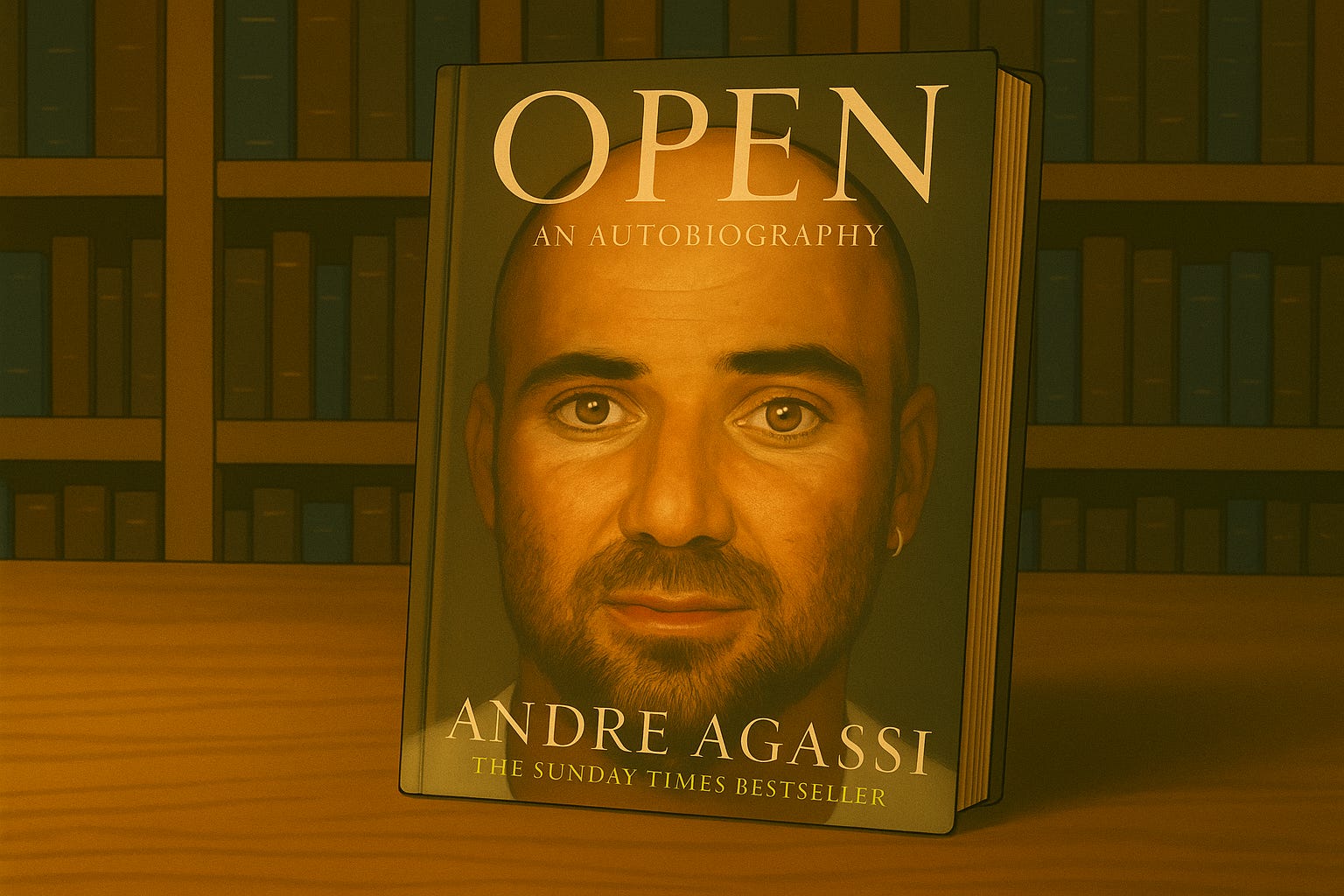
In his book, he shares his journey on how struggle and vulnerability became his fuel for reinventing himself, finding purpose, and ultimately, true greatness.
🚀 The Book in 3 Sentences
Agassi reveals that much of his tennis journey was forced upon him, revealing a lifelong love–hate relationship with his sport.
He shares his emotional struggles, from addiction to identity crises, from battling expectations, to showing how resilience and authenticity under pressure define success.
His ultimate transformation, which was rediscovering joy, fatherhood, and philanthropy, demonstrates the power of aligning purpose with passion beyond legacy.
🤔 Reflections
I remember having mixed emotions when I first read this book.
It is raw, brave and deeply human. I hadn’t heard people talk openly about some of the things that he was sharing. As someone involved in high-performance sports, the topic around me is always about how we (those involved in the space) should be thankful and appreciative that we are there.
Very seldom do people understand what athletes and coaches actually go through. From broken moments, to losing, to gut punches, to the sleepless nights. I was able to relate to this book in a way that I wouldn’t have thought of, and it invites us into the messy, emotional core behind greatness.
👤 Who Should Read It?
Coaches and players looking to understand the psychological journey behind elite performance
Leaders navigating burnout, identity, or the weight of expectations
Athletes seeking resonance with mental health, addiction, and rebuilding identity
☘️ How the Book Changed Me
I am getting close to removing this section from my book summaries, because I don’t know that I can accurately say that any book has truly changed me.
What this book did was allow me to understand that athletes can feel isolated and lonely, despite being surrounded by loved ones and being successful.
It allowed me to be more conscious of not framing success as only counting wins, but rather counting the moments of connection that I had with my athletes and families.
A change that I definitely made after reading this book is encouraging athletes to define themselves and their purpose beyond the game.
Finally, it affirmed my belief in living my values daily and by doing that, create my own legacy.
✍️ My Top 3 Quotes
“I hate tennis, hate it with all my heart, and still I keep playing… because I have no choice.”
“You are playing yourself, not your opponent.”
“One day your entire way of life ends. It’s a kind of death.”
📒 Key Concepts & Notes
🧠 The Mental Game Is Everything
Agassi’s personal battles with motivation, depression, and addiction show the centrality of mental resilience in sport.
This is important because we often equate athletes with being physically and mentally dominant. Still, we don’t account for just how much the mental and psychological toil is on these athletes.
As a coach, I have become more conscious in creating space for checking in with my athletes, normalising and displaying vulnerability (if they see me being vulnerable, they may know that it is okay for them to do so too) and integrating mental tools proactively within our program.
🛠 Identity Beyond the Athlete
Agassi nearly lost himself, then found purpose through fatherhood and philanthropy.
It goes to show us that athletic identity is fragile, if not fleeting. Finding deeper meaning sustains when form fades.
As coaches, we need to encourage our athletes to have multi-dimensional development. From academics to family to other interests that extend beyond the game.
🔁 Struggle as Catalyst
His low point, drug use, and ranking collapse became his turning point.
This is interesting, as a lot of times, a moment of lowness becomes the catalyst for profound transformation.
As coaches, we can facilitate this mindset by asking our players to reflect following setbacks, “What can we learn from this?”
🌱 Growth Requires Grace
He transitioned through self-forgiveness and letting go of control. If an athlete cannot get to the stage of letting go of control, they may shame themselves, and their constant self-judgement can limit their growth.
How do you, as a coach, teach self-compassion alongside discipline? How do you allow for your athletes to grow?
🏀 Coaches’ Corner: 5 Takeaways to Use This Week
Run a Mental Hardship Check-In
Ask players to name a struggle (on/off court). Encourage honesty and normalise seeking help. If this is a new team, and you don’t have trust, do this anonymously.
“Define You Beyond Sport” Assignment
Use a quick exercise: list roles/qualities outside basketball. Share across the team to build identity diversity.
Debrief Tough Moments as Group Lessons
After a loss or setback, ask: “What did this teach us about who we want to be?”
Celebrate Recovery Stories
Highlight times when players bounced back from a slump or a mistake. Build a culture of resilience through storytelling.
Guide a Purpose Discovery Session
Ask: “What impact do you want to have beyond winning?” Use Agassi’s post-career path as a model for purpose-driven legacy.
🔗 Connections and Curiosities
Agassi’s identity journey mirrors Ikigai and Legacy, emphasising purpose beyond performance.
Open shares Jocko Willink’s ethos in Extreme Ownership, own every part of your journey, bumps and all.
It resonates with The Rise of Superman (Steve Kotler) on pushing through fear and flow’s transformational edge.
Future reading I’d explore: The Inner Game of Tennis (Gallwey) for mental mastery; Man’s Search for Meaning (Frankl) for purpose through suffering; and revisit Mindset (Dweck) for resilience in the face of challenge.